
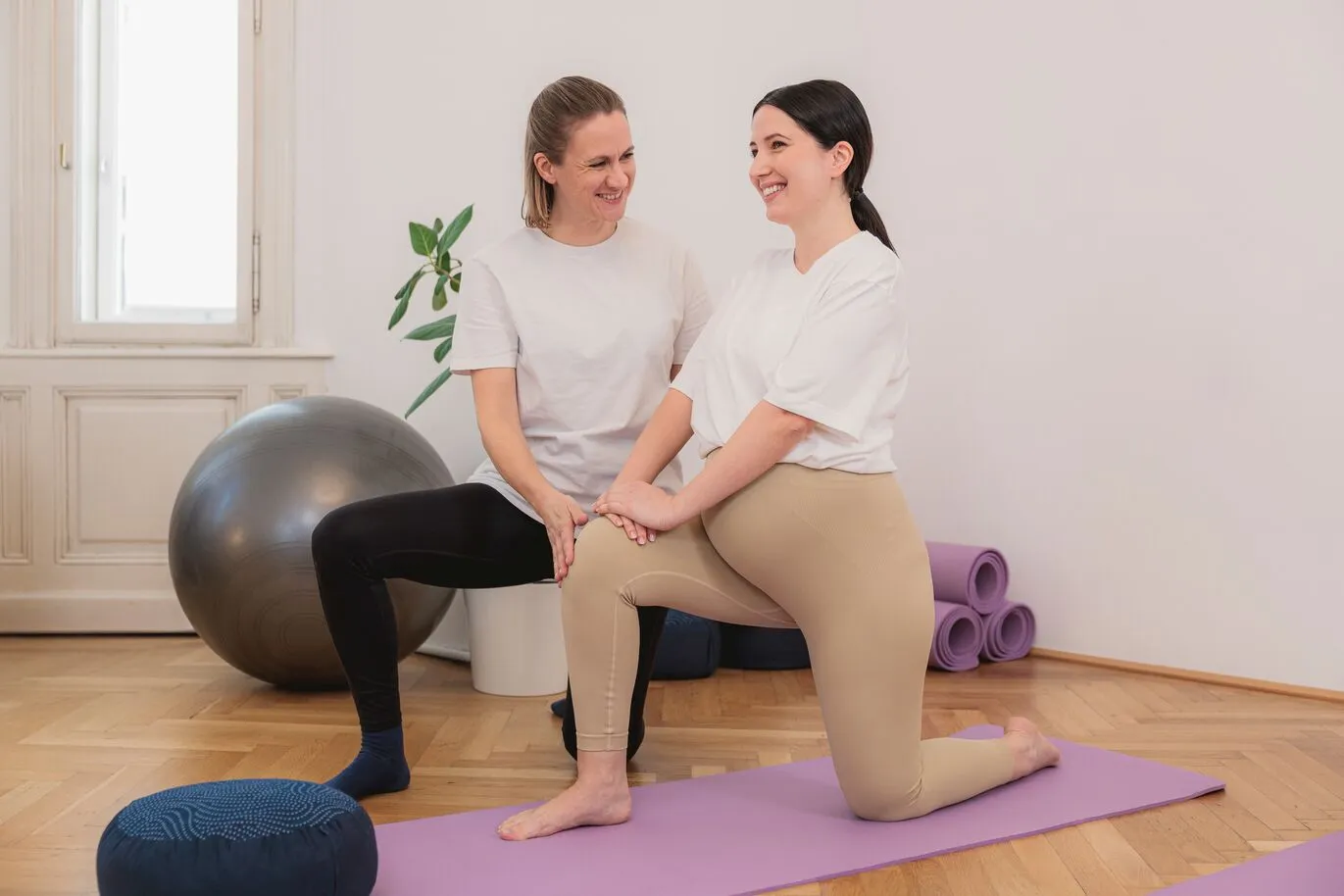
Pelvic floor disorders after childbirth are common yet often remain a taboo subject. Even more important are the measures for early awareness, preventive support, and integration into daily life.
These factors are crucial for women’s health and quality of life. One of my former patients contacted me two years after the birth of her child. She reported experiencing stress urinary incontinence when running, laughing, or sneezing. As a result, she has increasingly avoided physical activity, and her world has gradually become smaller.
Cases like this are not isolated. We encounter them in everyday practice more often than we might assume.
Around 25% of women in Germany are affected by urinary incontinence or other pelvic floor disorders. ¹ Studies also show that a significant proportion of women develop pelvic floor dysfunction in the course of the postnatal period. ³ Globally, we are talking about more than one billion affected women. ³
Stress incontinence is the most common form, followed by urge incontinence. In severe cases, particularly after significant birth trauma, fecal incontinence may also occur. ⁴
And yet, this topic is still too rarely addressed proactively in routine care.
The Pelvic Floor as a Functional System
This makes it even more important to take a closer look at the pelvic floor itself: The pelvic floor is a finely coordinated system of muscles, fascia, and connective tissue, playing a central role in continence, organ support, and core stability.
In addition to well-known risk factors such as connective tissue weakness, obesity, or hormonal changes, obstetric factors also play a role. ³
Intrapartum risk factors include women adopting restricted birth positions such as being supine in labor, directed active pushing, and having a macrosomic baby. Such factors can increase the risk of pelvic floor injury. ³
Prevention Begins During Pregnancy
Ideally, pelvic floor health should already be addressed during pregnancy.
However, in practice, many women only begin to develop an understanding of their pelvic floor during postnatal recovery classes, as key associations were often not explained before or during pregnancy. ⁴
Yet early education can make a big difference. Even simple exercises can help develop a better sense and security of one’s body.
In my practice, I often recommend a simple exercise that can be easily integrated into daily routines: while brushing their teeth, women should gently activate the pelvic floor as they exhale, rise onto their tiptoes, hold the tension briefly, and then consciously release it. This sequence can be repeated throughout the brushing routine.
I also encourage my patients to incorporate pelvic floor training while sitting: sitting upright, placing a cushion between the knees, activating the pelvic floor during exhalation while applying gentle pressure, and then releasing again.
Preparation for birth is equally important. Women should be encouraged to adopt upright positions and to follow their natural urge to push. International studies show that upright birthing positions are associated with fewer interventions and, in some cases, lower rates of perineal trauma. ⁵
Recovery Is a Process
A postnatal recovery course is an important first step but not the end.
Sustainable recovery requires integrating pelvic floor awareness into everyday movements. Studies show that some symptoms may persist in the long term. ² This makes early support and ongoing guidance essential.
More Than a Physical Issue
Pelvic floor dysfunction often affects multiple areas of life. It influences physical activity, daily routines, and psychosocial wellbeing. ³
Changes in sexual health are also not uncommon yet are rarely discussed. Healthcare professionals can make a significant difference here by addressing the topic openly and sensitively.
Possible questions might include:
• Have you noticed any changes in urination?
• Do you occasionally leak urine during exercise, during coughing or laughter?
• Would you like us to assess your pelvic floor together?
Involving partners can also be supportive and help foster understanding of the individual situation.
More Than Just Pads
Absorbent pads may provide absorbency, but they do not address the underlying cause.
The goal should always be to sustainably improve pelvic floor function. ³
Improving Care Together
Midwives play a central role in supporting women, not least because they usually have strong professional networks.
If symptoms persist, referrals are advisable - for example, to urogynecology or specialized physiotherapy.
Interdisciplinary pelvic floor centers offer excellent opportunities for this, as they bring together a range of professional expertise.
Looking Beyond Borders
A look at other countries highlights how differently this topic is approached.
In France, pelvic floor rehabilitation after childbirth is a standard part of care and is routinely prescribed. ³ In Scandinavian countries, there is a stronger focus on movement-oriented obstetrics and supporting self-determined birthing positions. ³
Both approaches underline the importance of early prevention and its structured integration into routine care
Conclusion
Pelvic floor health is a central aspect of women’s health.
For healthcare professionals, this means providing early education, addressing the topic sensitively, and consciously integrating preventive measures into care.
A postnatal recovery course is not the end, but the beginning of a process. A well-functioning pelvic floor develops through awareness, knowledge, and continuous support.
And above all, it means one thing: improved quality of life.
Published in May 2026. This article was created in collaboration with an expert who received compensation from MAM.

References:
1. Universitätsklinikum Jena. (2024, 4. September). Wenn der Beckenboden nach Schwangerschaft und Geburt gelitten hat. https://www.uniklinikum-jena.de/geburtsmedizin/%C3%9Cber+uns/Aktuelles/Pressemitteilungen/Wenn+der+Beckenboden+nach+Schwangerschaft+und+Geburt+gelitten+hat-pos-0.html
2. Moossdorff-Steinhauser, H. F. A., Berghmans, B. C. M., Spaanderman, M. E. A. & Bols, E. M. J. (2021). Prevalence, incidence and bothersomeness of urinary incontinence between 6 weeks and 1 year post-partum: a systematic review and meta-analysis. International Urogynecology Journal, 32(7), 1675–1693.
3. González-Timoneda, A., et al. (2025). Prevalence and impact of pelvic floor dysfunctions on quality of life in women 5–10 years after their first vaginal or caesarian delivery. Heliyon, 11(3), e42018.
4. Lüking, K. (2024). Königin im Wochenbett. Südwest.
5. Gupta, J. K., Sood, A., Hofmeyr, G. J., & Vogel, J. P. (2017). Position in the second stage of labour for women without epidural anaesthesia. Cochrane Database of Systematic Reviews, 2017(5), CD002006.